The appointment of a UN Special Rapporteur on Human Rights and Climate Change would be a clear demonstration of commitment of the Council to the protection of the climate vulnerable.
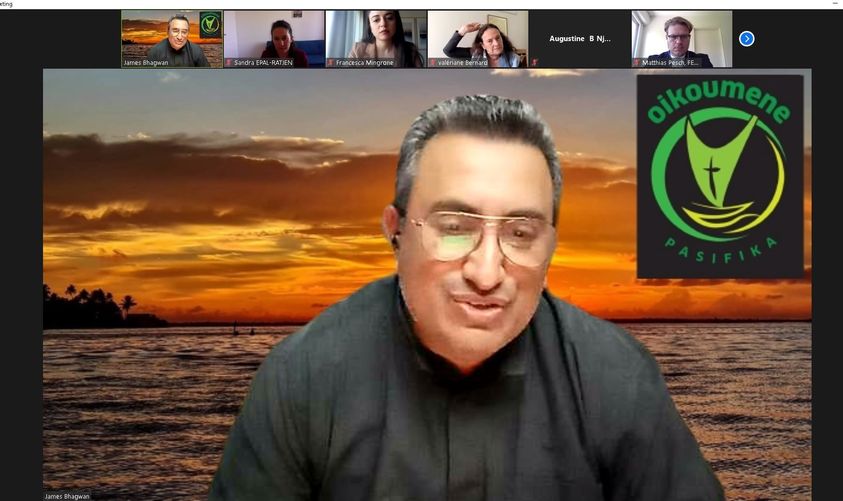
This was the call by PCC General Secretary, Rev. James Bhagwan at a meeting convened by the Geneva Climate Change Consultation Group (GeCCco), ahead of the 47th Session of the UN Human Rights Council.
In 2019, the Marshall Islands, on behalf on the Climate Vulnerable Forum (CVF), called for the creation of a dedicated HRC’ Special Rapporteur on human rights and climate change at the 25th Conference of the Parties to the UN Framework Convention on Climate Change. This call echoed a longstanding request by a group of civil society organizations, which asserts that a new Special Rapporteur on Human Rights and Climate Change would permit to upscale the work of the HRC on climate change in a systematic and sustainable way, protect people from its adverse impacts, and promote respect for human rights in climate responses.
In the past two years, this proposal has gained momentum amongst States. Bangladesh called for this new Special Rapporteur in its capacity as the 2020 Chair of the CVF, as did the Marshall Islands and other developing states in July 2020, the Micronesian Pacific States in October 2020, and the Pacific Islands Forum Foreign Ministers in October 2020.
During the 46th session of the HRC in March 2021, in an unprecedented move, a cross-regional group of 57 States joined Bangladesh in a statement that called upon Council members to consider creating this new mandate. It is now time to act on these calls.
Intervention by Rev. Bhagwan:
“Greetings from the Pacific. I speak as a representative of the Pacific Conference of Churches, made up of 32 Mainline Churches and 11 National Councils of Churches from 18 Pacific Islands States and territories that account for some 80 percent of the Pacific population, people with a spiritual, cultural and holistic relationship with the environment.
Since 2004 Pacific Church Leaders have recognised that the impact of climate change presents an existential threat for Pacific places and people, many at the forefront of both slow and rapid onset events.
12 years ago they issued the Moana Declaration that raised the issue of climate change induced displacement and both planned and unplanned migration and the question of protection and dignity – of human rights as well as socio-economic and cultural rights.
It is the difference between exile and exodus for the displaced and hospitality and hostility for host communities.
This is a matter of justice, peace and security for our people. It is a matter of life or extinction.
The imperative to address climate change through the human rights perspective has become more urgent as we seek to protect the rights of present and future generations. Human Rights protect communities that are acutely vulnerable.
The Human Rights Council has been addressing the impact of climate change on human rights. Most recently in the Pacific we have worked with the Pacific Office of the Commissioner for Human Rights in a Technical Advisory Group on Climate Change Migration and Human Security which includes the current President of the Human Rights Council.
However, it is still lacking consistency and continuity. The establishment of a Special Rapporteur will be very much needed to mainstream the discussion at the Council.”
We would like to propose the following elements to be considered as part of the mandate of the future UN Special Rapporteur on Human Rights and Climate Change should include:
To raise awareness of and document the human rights impacts of climate change and climate responses through reports; country visits, receiving communications and organizing consultations with affected communities.
To clarify states’ obligations and responsibilities in terms of climate change and human rights and develop guidance and indicators for national law-making processes.
To promote policy coherence between climate actions and international human rights obligations and to mainstream a human rights-based approach in all climate change-related actions and policies.
To be the focal point for dialogue with governments, civil society, international financial institutions, Treaty Bodies and other Special Procedures.
To exchange views and information with a wide range of UN institutions, including the UNFCCC, in order to promote a human rights-based approach in the context of climate governance.
To interact with governments and monitor their climate policies in order to provide technical advice and promote better participation of civil society in national processes.
To synthesize existing knowledge and good practices regarding human rights obligations in the context of climate change.
In a time of much uncertainty, the appointment of a UN Special Rapporteur on Human Rights and Climate Change would be a clear demonstration of commitment of the Council to the protection of the climate vulnerable.
 Fast, Pray, and Praise